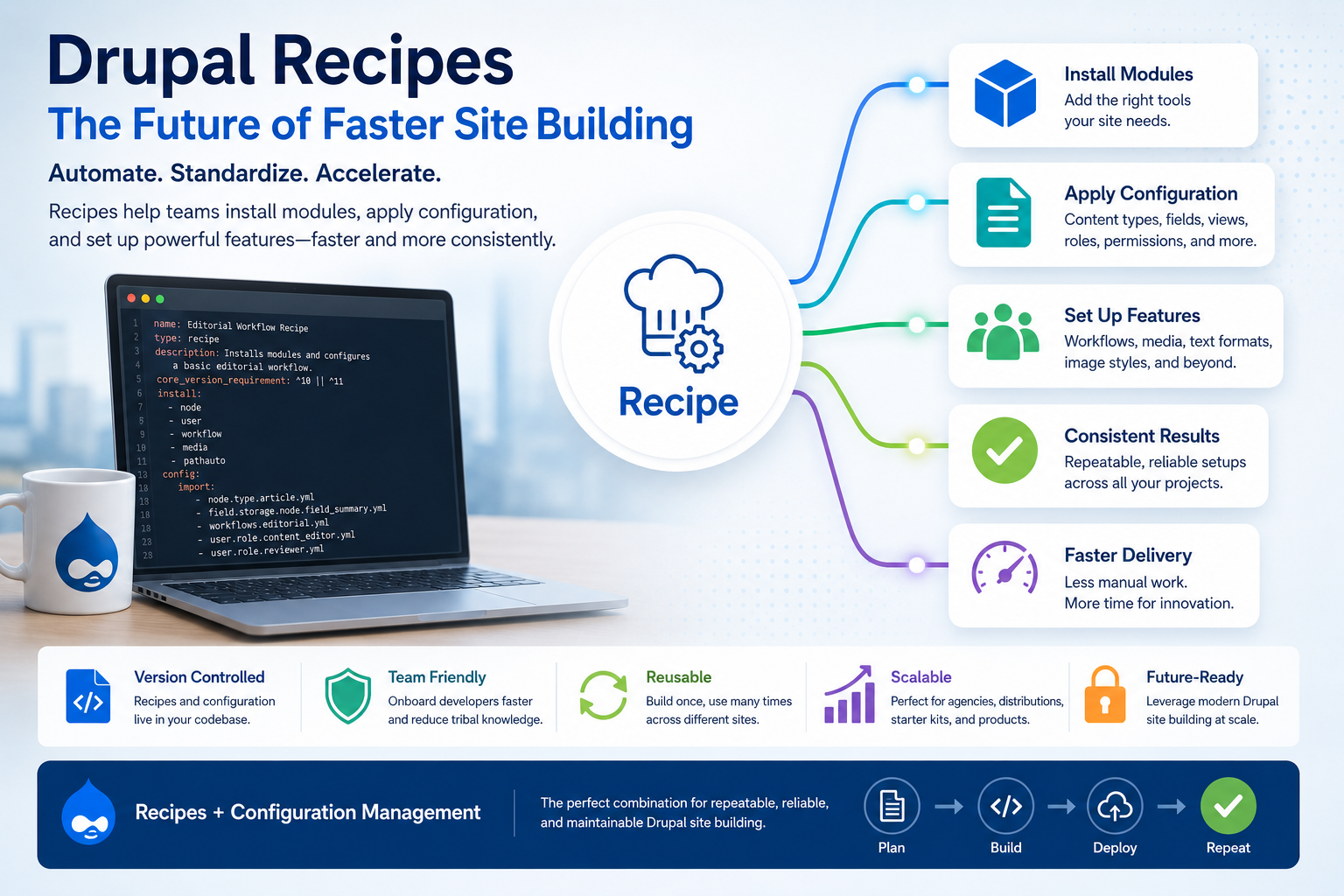
Drupal Recipes help automate repeatable site-building tasks by installing modules, applying configuration, and setting up common features. They give developers and agencies a faster way to create consistent Drupal builds.
Webdrips' Learning Drupal Insights
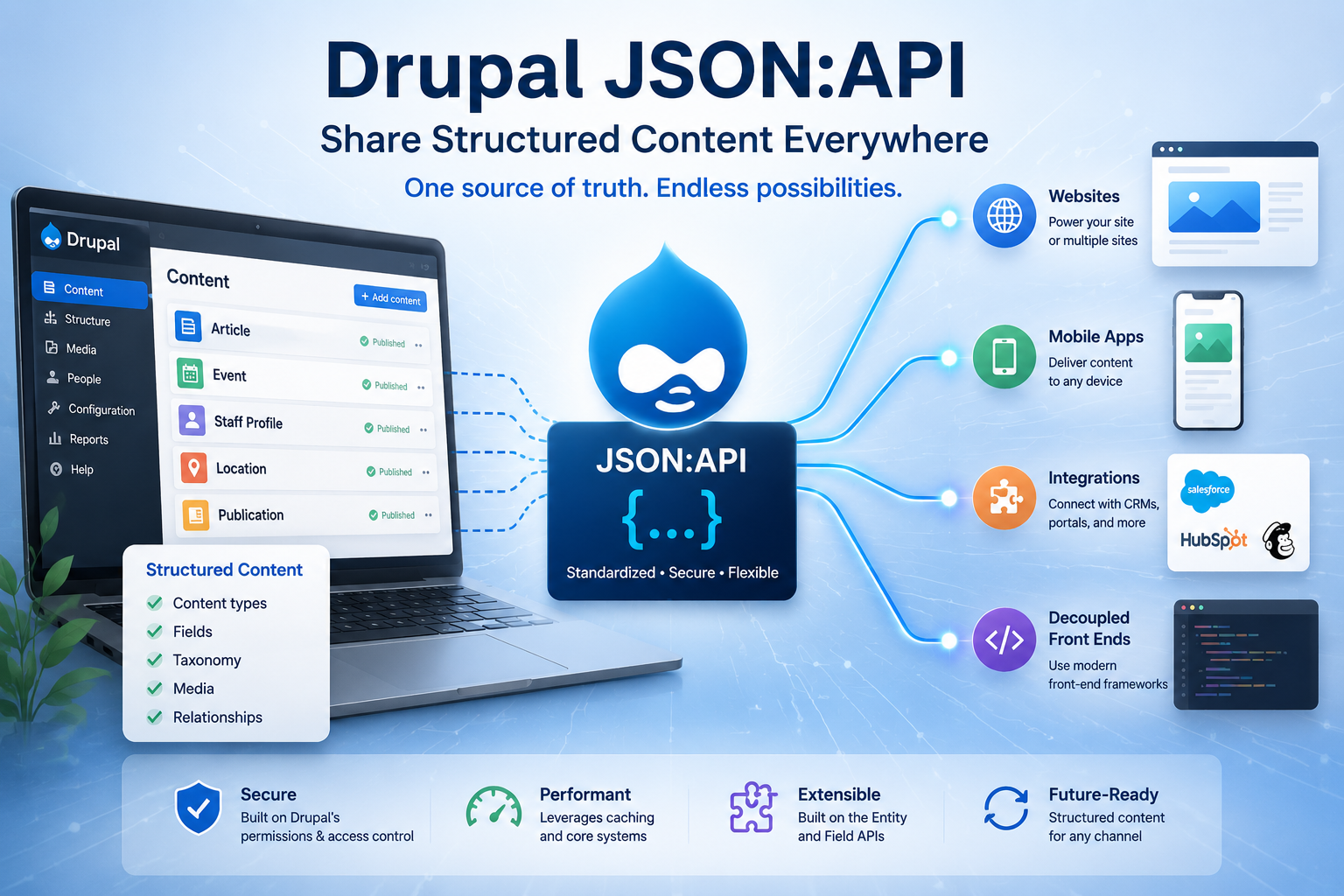
Drupal JSON helps developers expose structured Drupal content for websites, mobile apps, decoupled front ends, and third-party integrations. It gives teams a standardized way to reuse content beyond the traditional website.
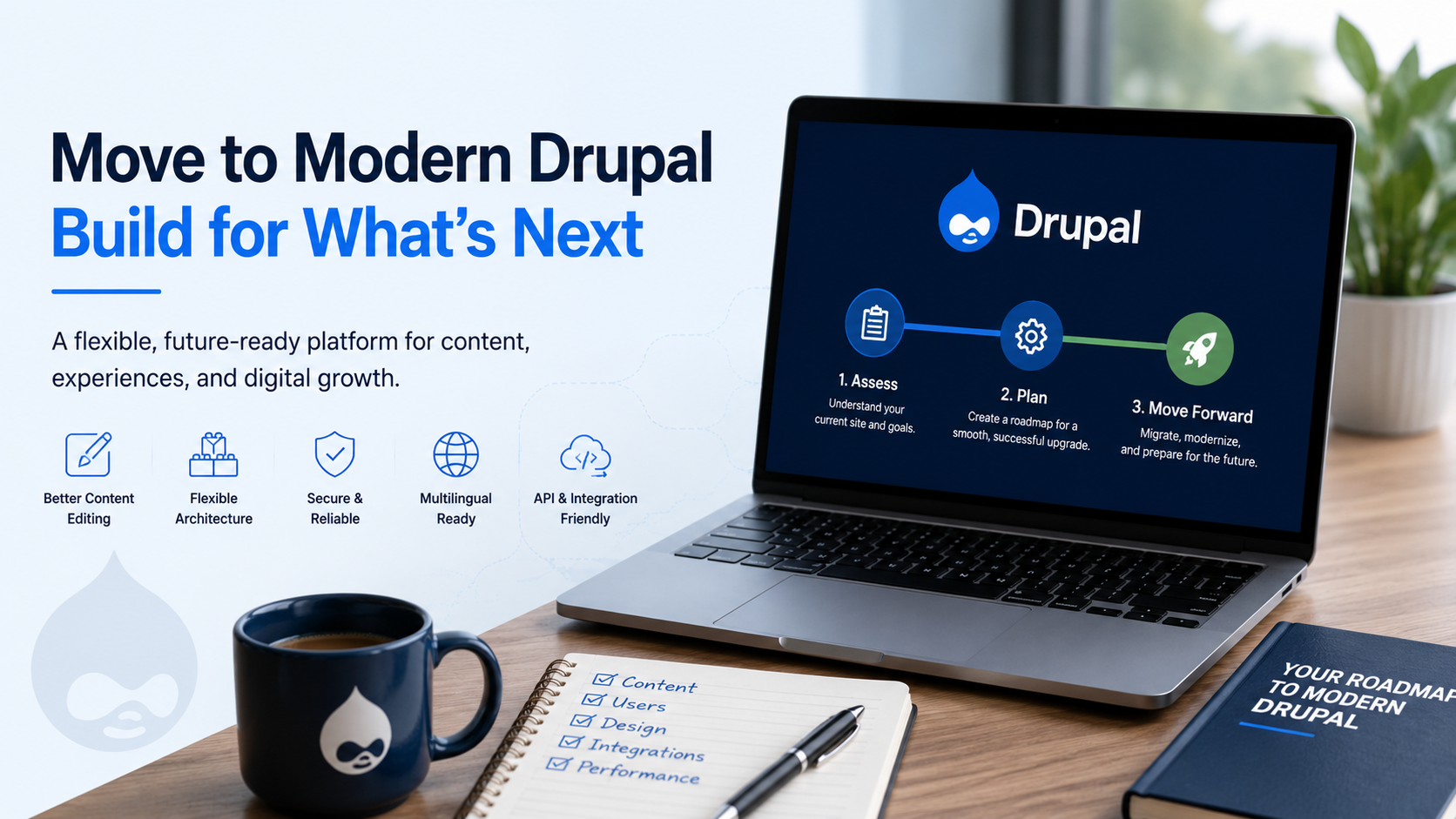
Drupal is a flexible content management system for building structured, scalable, and secure websites. This overview explains why organizations move to modern Drupal and what to consider when planning an upgrade.
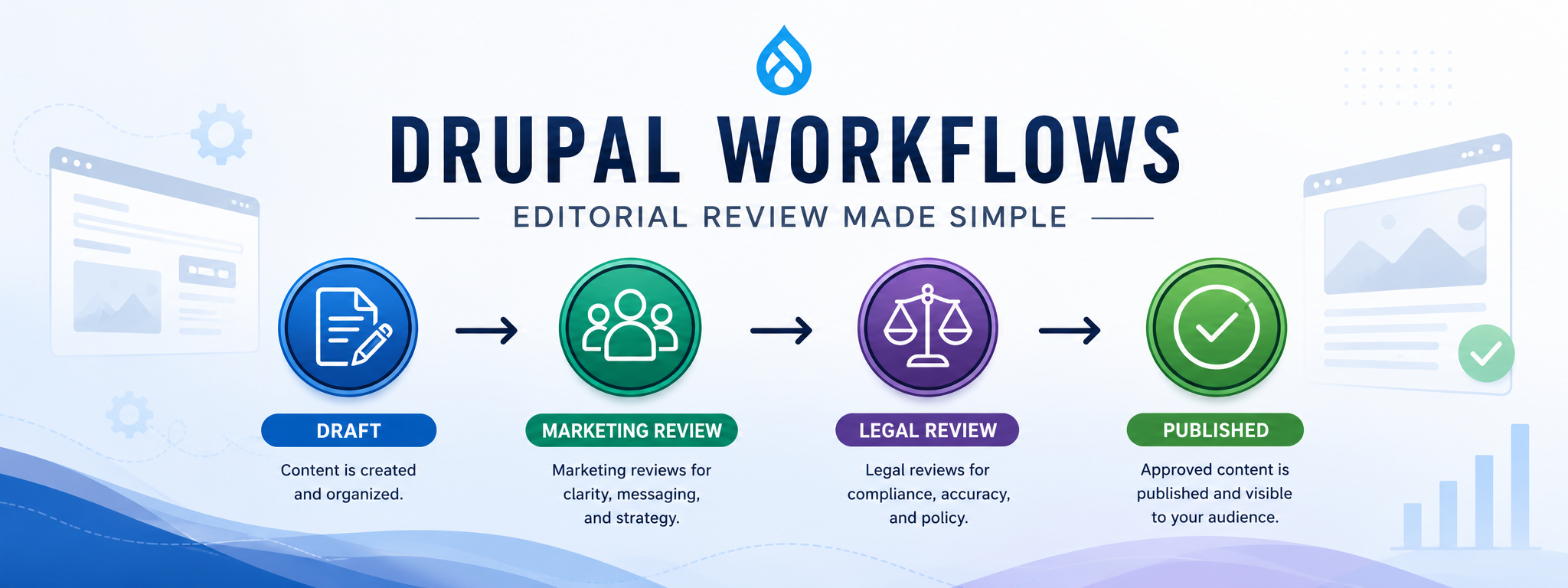
Drupal’s Workflows and Content Moderation modules help teams move content through draft, review, and published states. This demo shows how editorial workflows can support structured review, role-based approvals, and safer publishing.
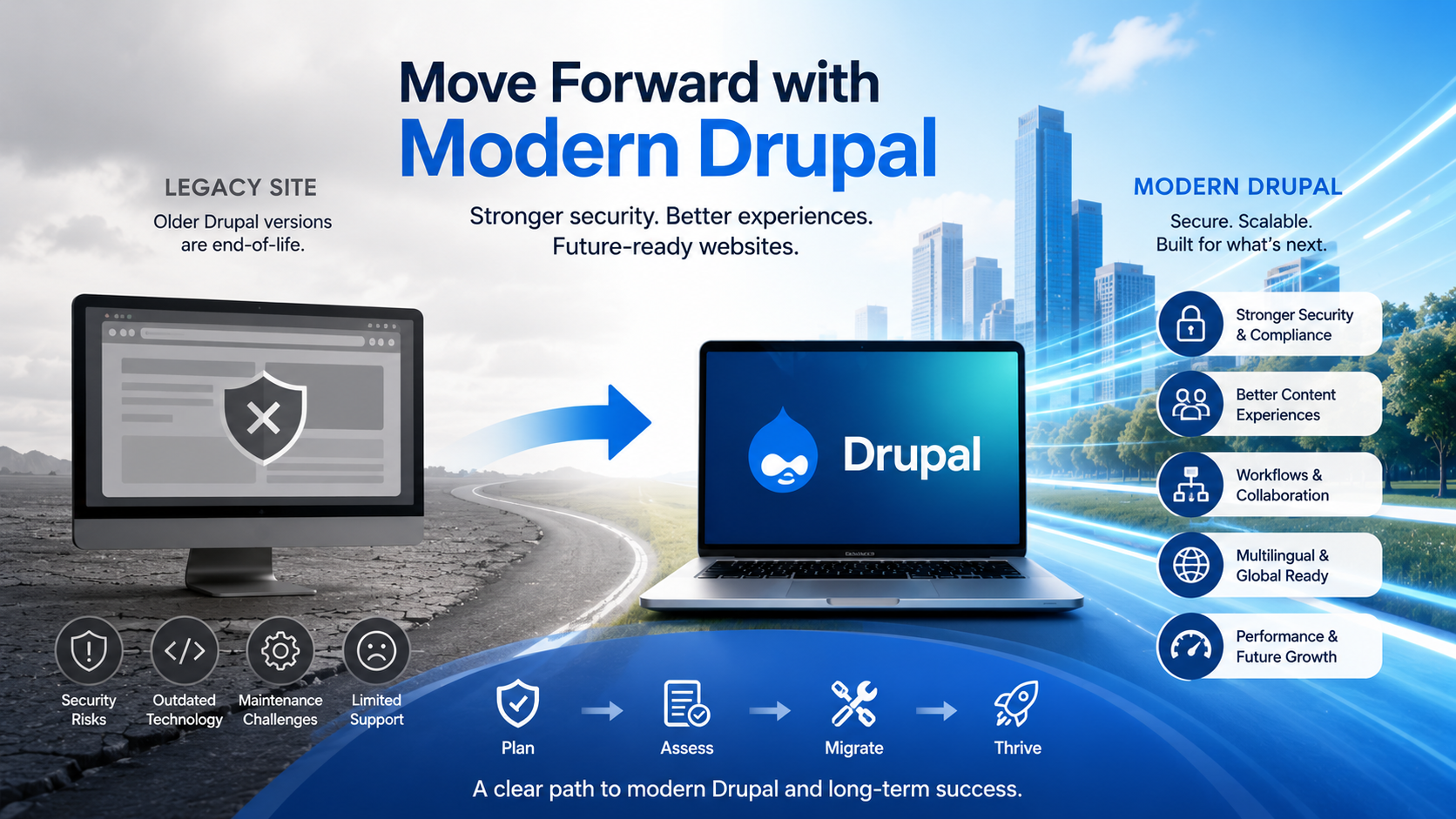
Modern Drupal gives organizations a stronger foundation for security, accessibility, content editing, structured content, media management, workflows, multilingual publishing, and long-term maintenance.
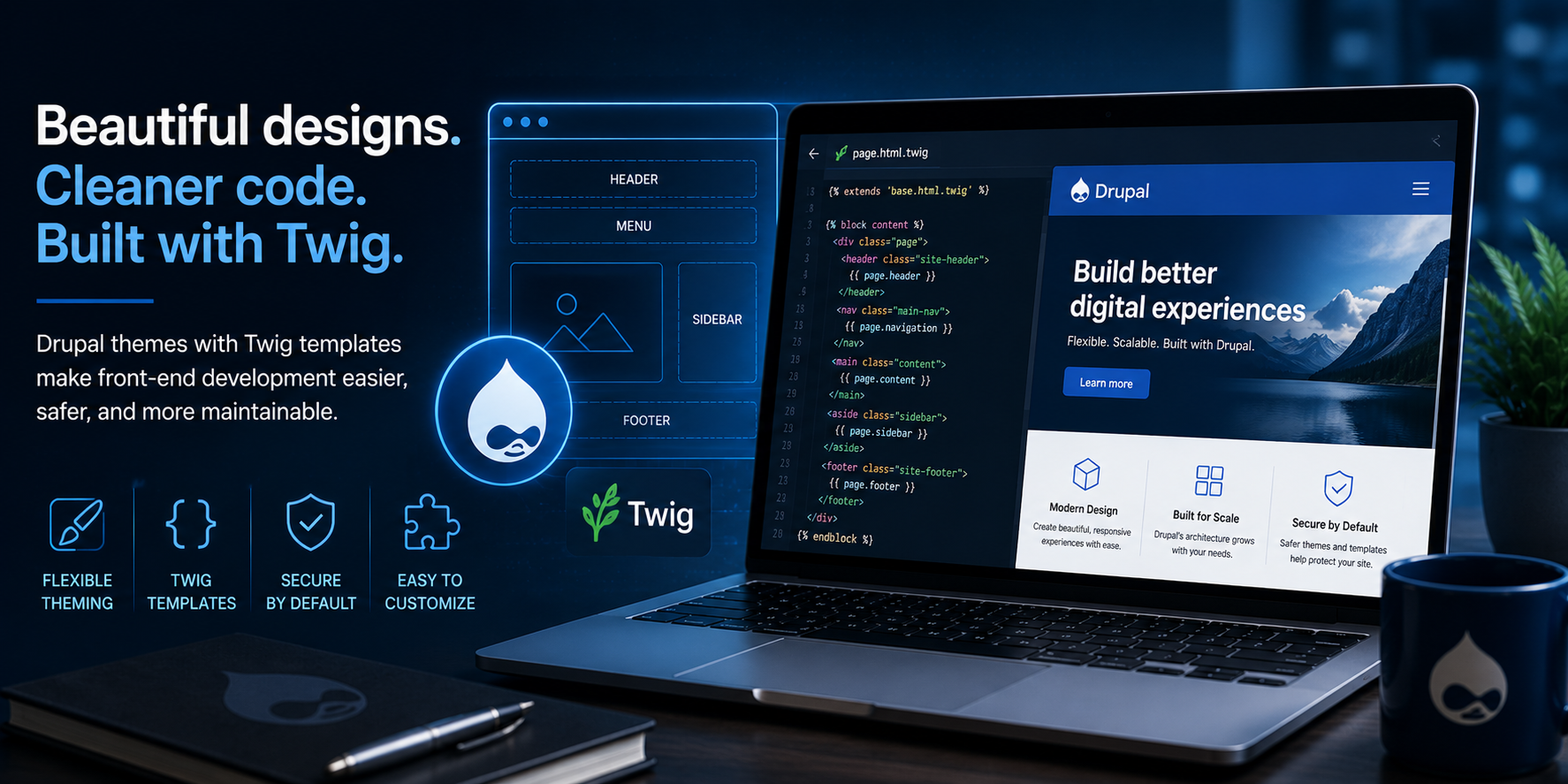
Drupal themes and Twig templates help front-end developers build structured, reusable, and maintainable website designs. This overview explains how Drupal separates presentation from business logic and supports flexible theme development.
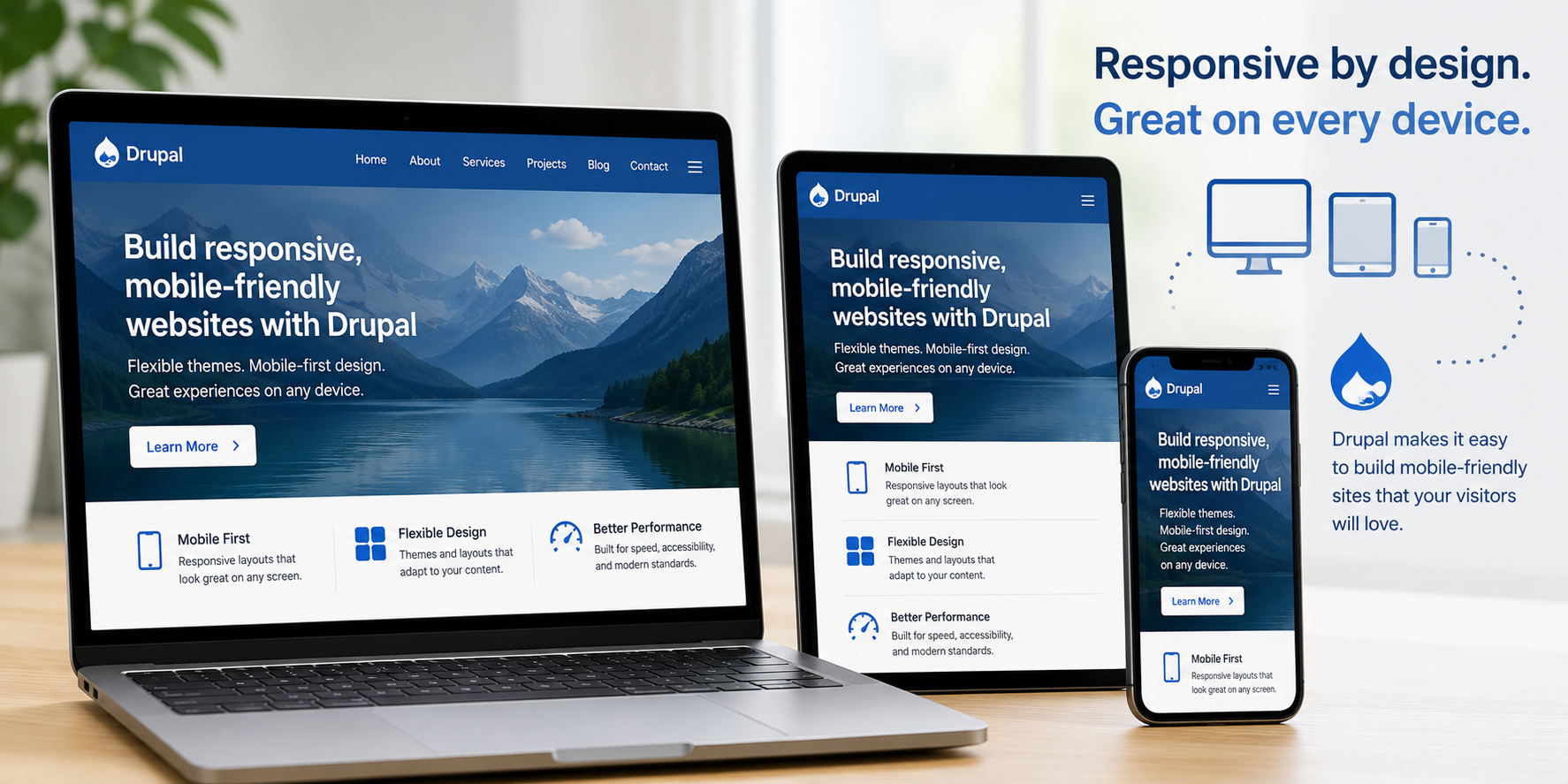
Drupal supports responsive, mobile-friendly websites through flexible themes, structured content, image styles, and layout tools. This overview explains how Drupal helps teams build sites that work across phones, tablets, and desktops.
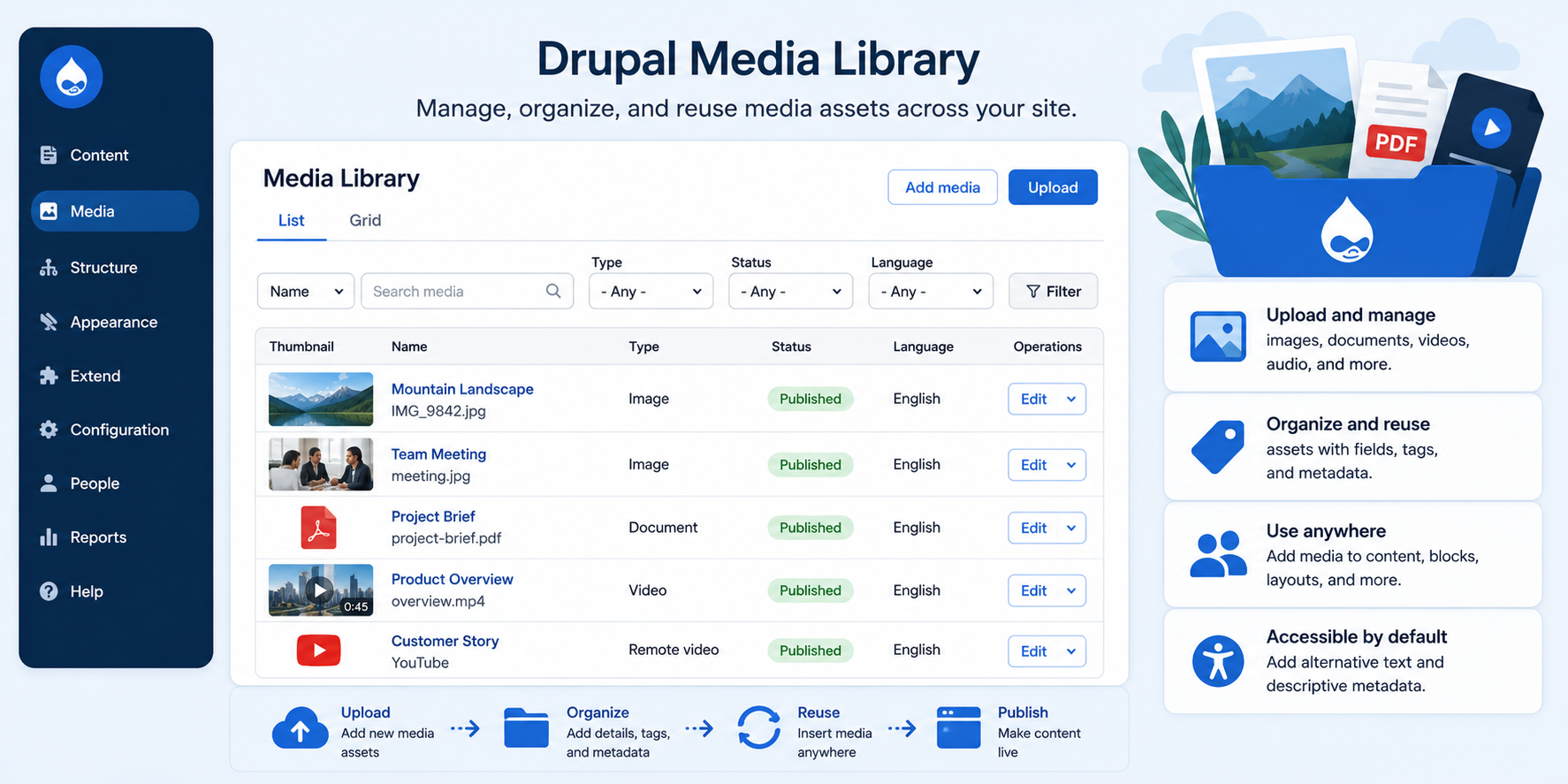
Drupal Media Library helps editors upload, organize, reuse, and manage images, documents, videos, and other media assets across a website. It gives teams a more consistent way to work with media while supporting accessibility metadata like alternative text.
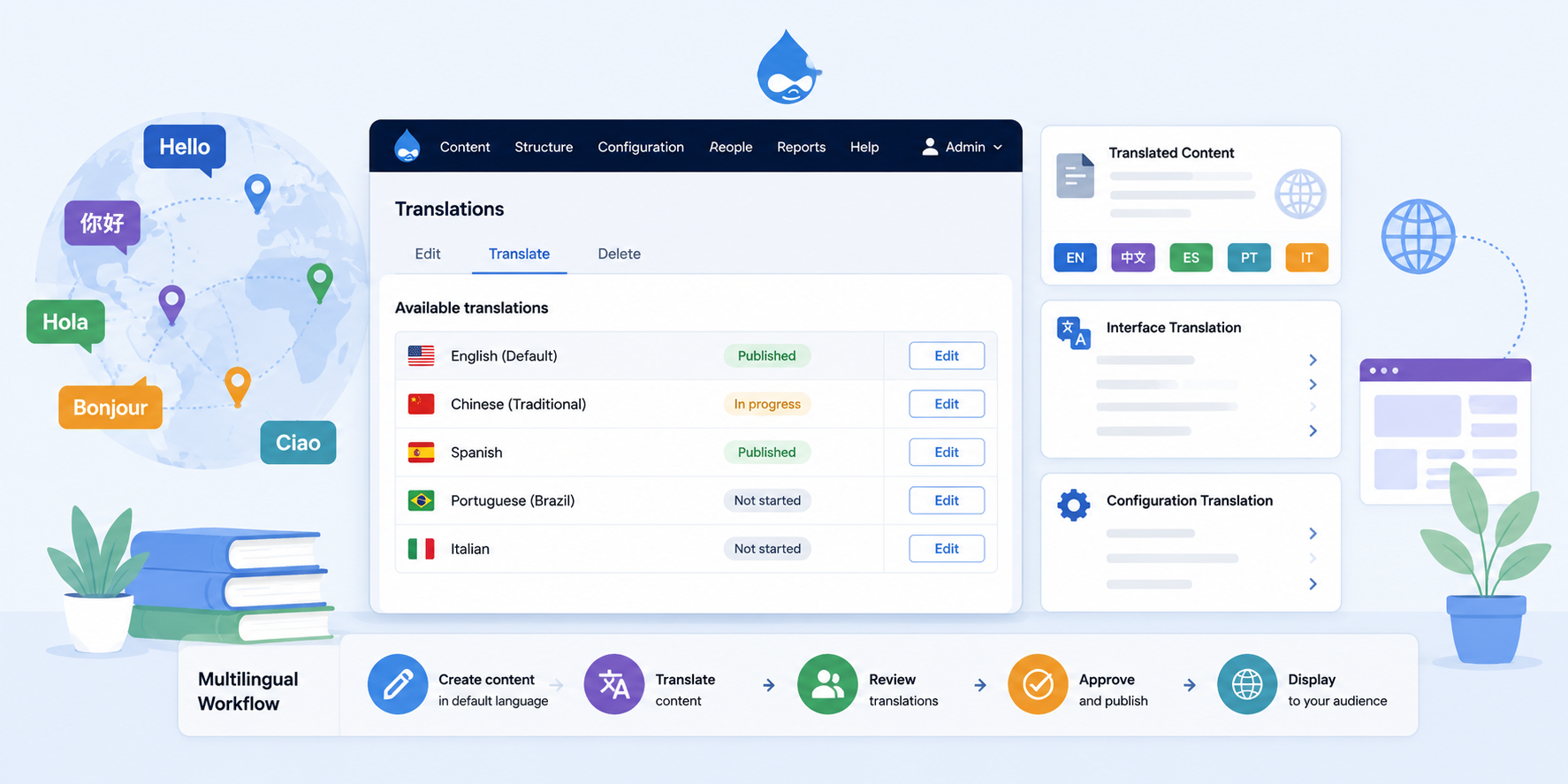
Drupal’s multilingual tools help teams add languages, translate content, manage translated interface text, and configure language-specific site settings. This overview shows how Drupal supports multilingual publishing across content, media, menus, taxonomy, users, and configuration.
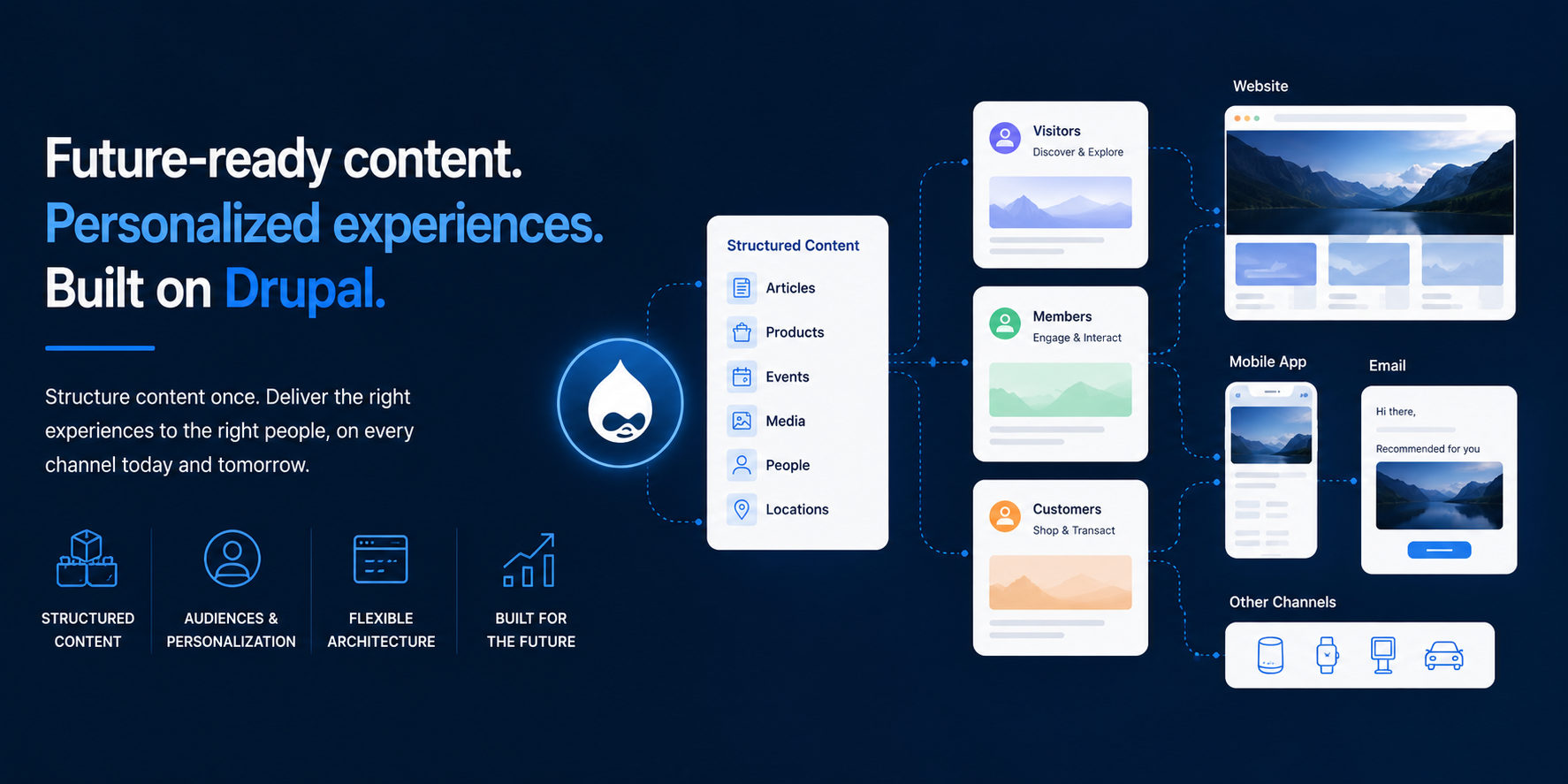
Drupal supports personalized and flexible digital experiences through structured content, reusable components, taxonomy, APIs, user roles, and integration-friendly architecture.
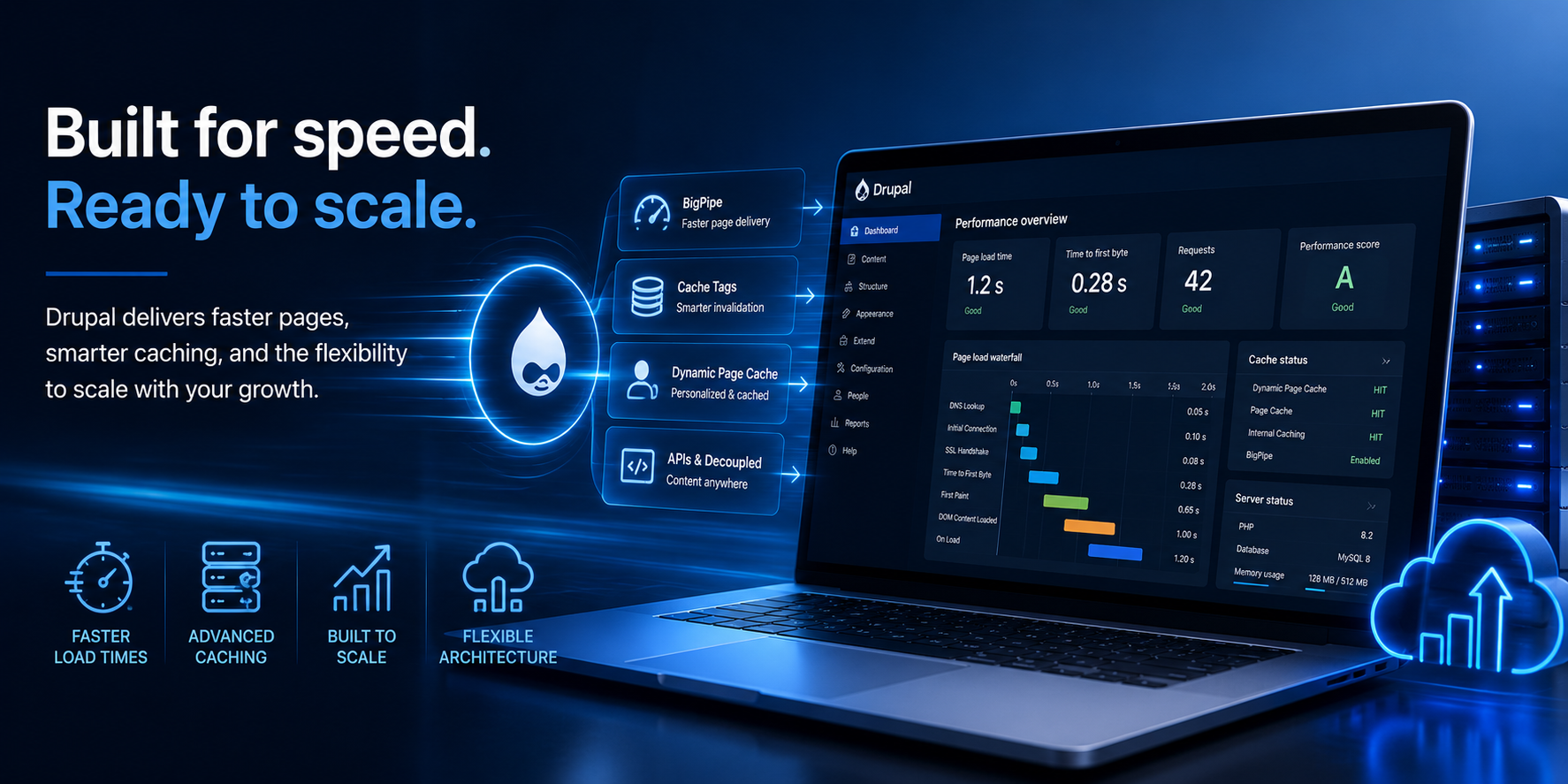
Drupal supports high-performance and scalable websites through caching, optimized asset handling, structured content, database-backed architecture, and flexible hosting options.
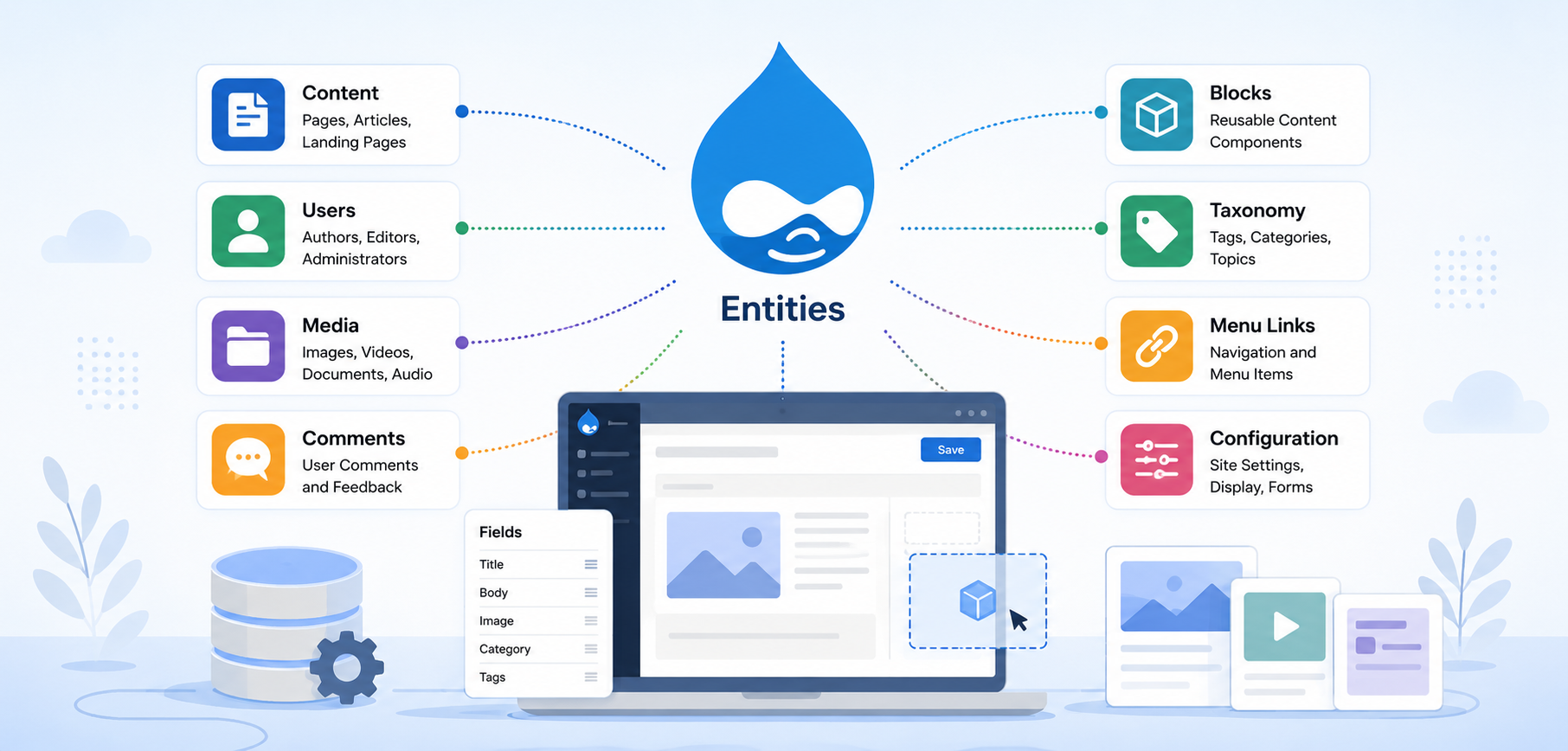
Drupal entities are the foundation for structured content. They allow site builders to define content types, fields, media, taxonomy terms, users, and reusable data structures that can support flexible website features.
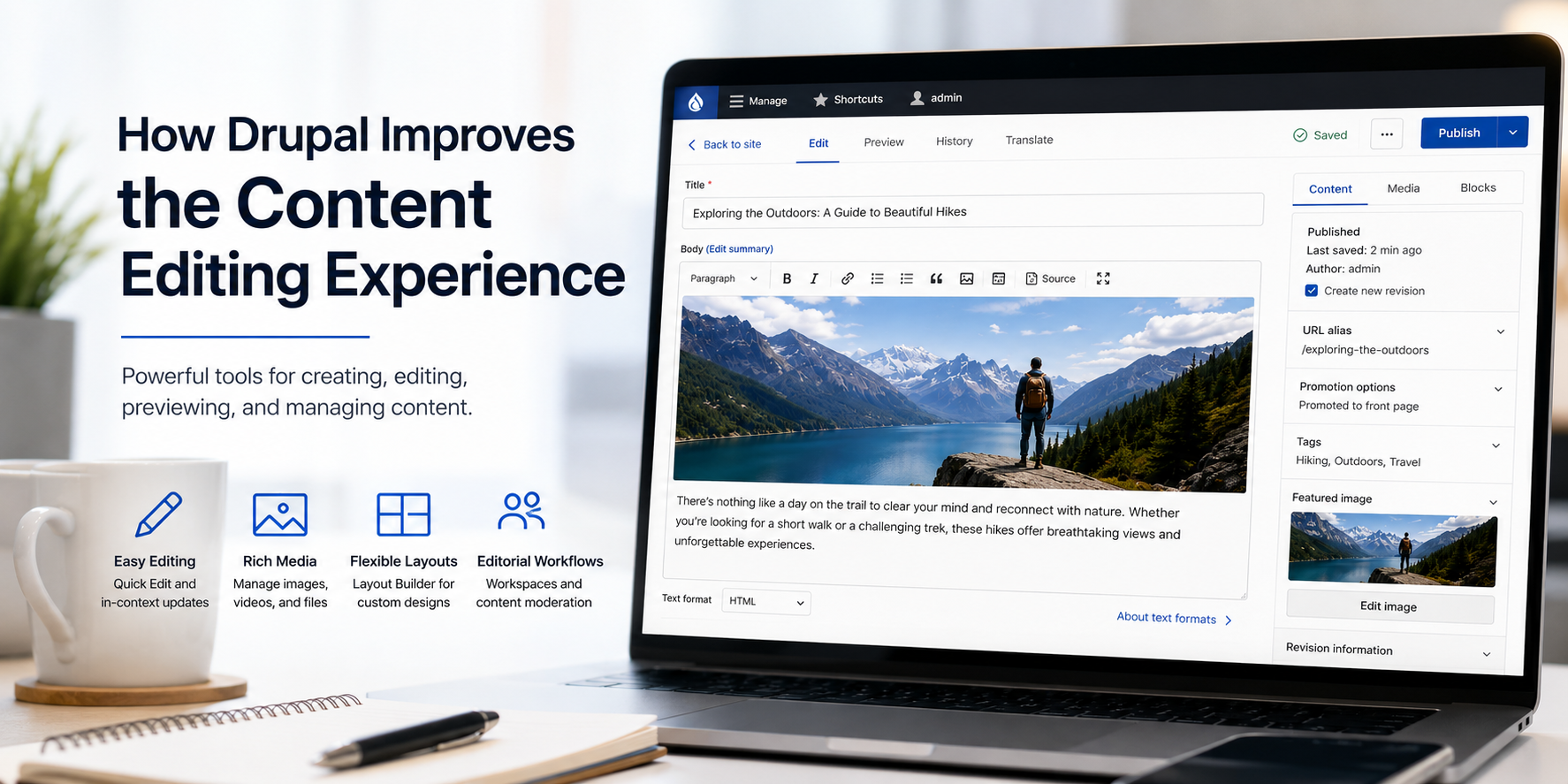
Drupal gives content editors a flexible authoring experience for creating, editing, previewing, and managing content. This overview highlights tools that make everyday content updates easier for editorial teams.
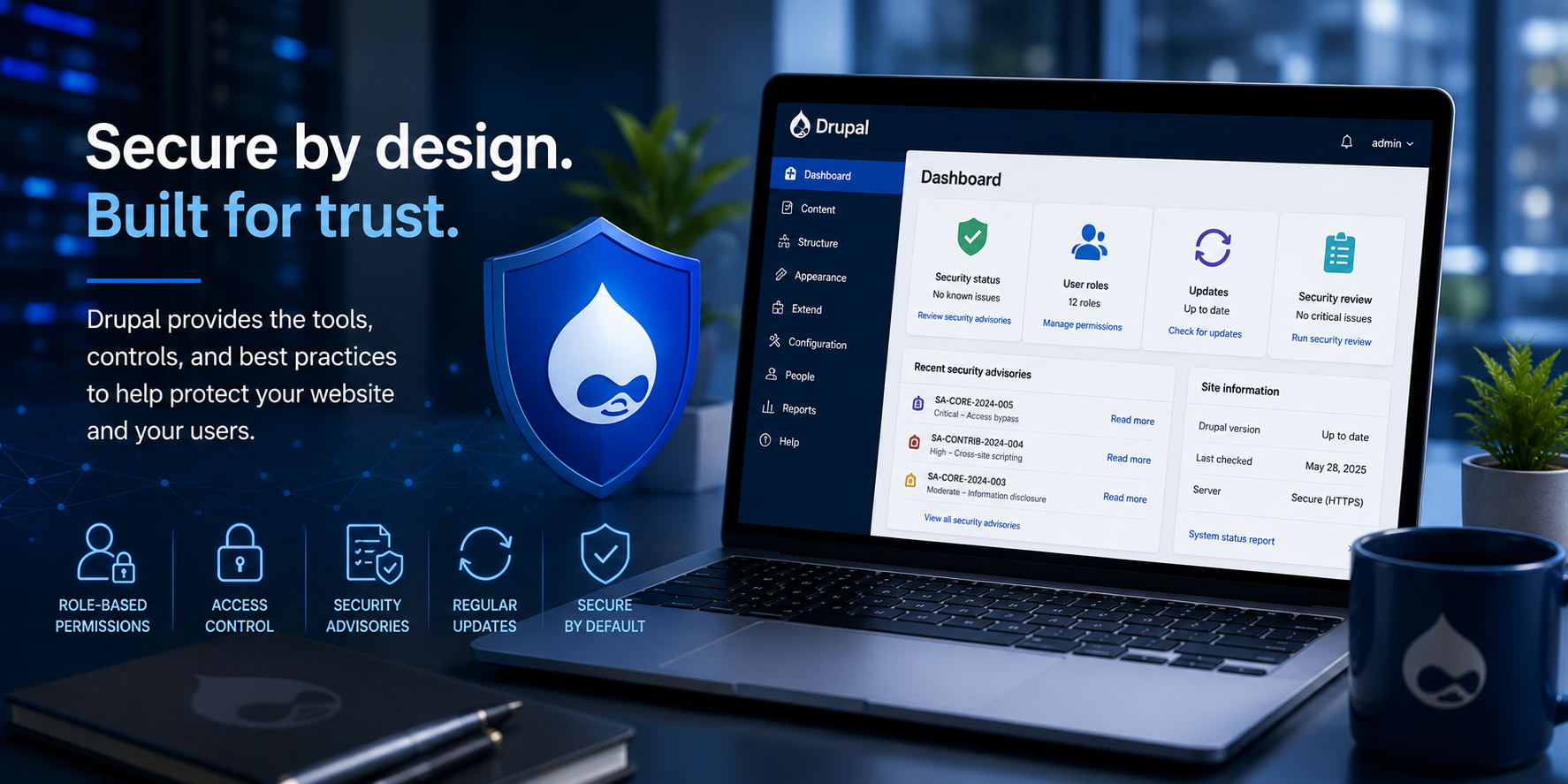
Drupal provides a strong security foundation through core review, security advisories, access controls, safe rendering, text filtering, configuration management, workflow tools, and mature update practices.
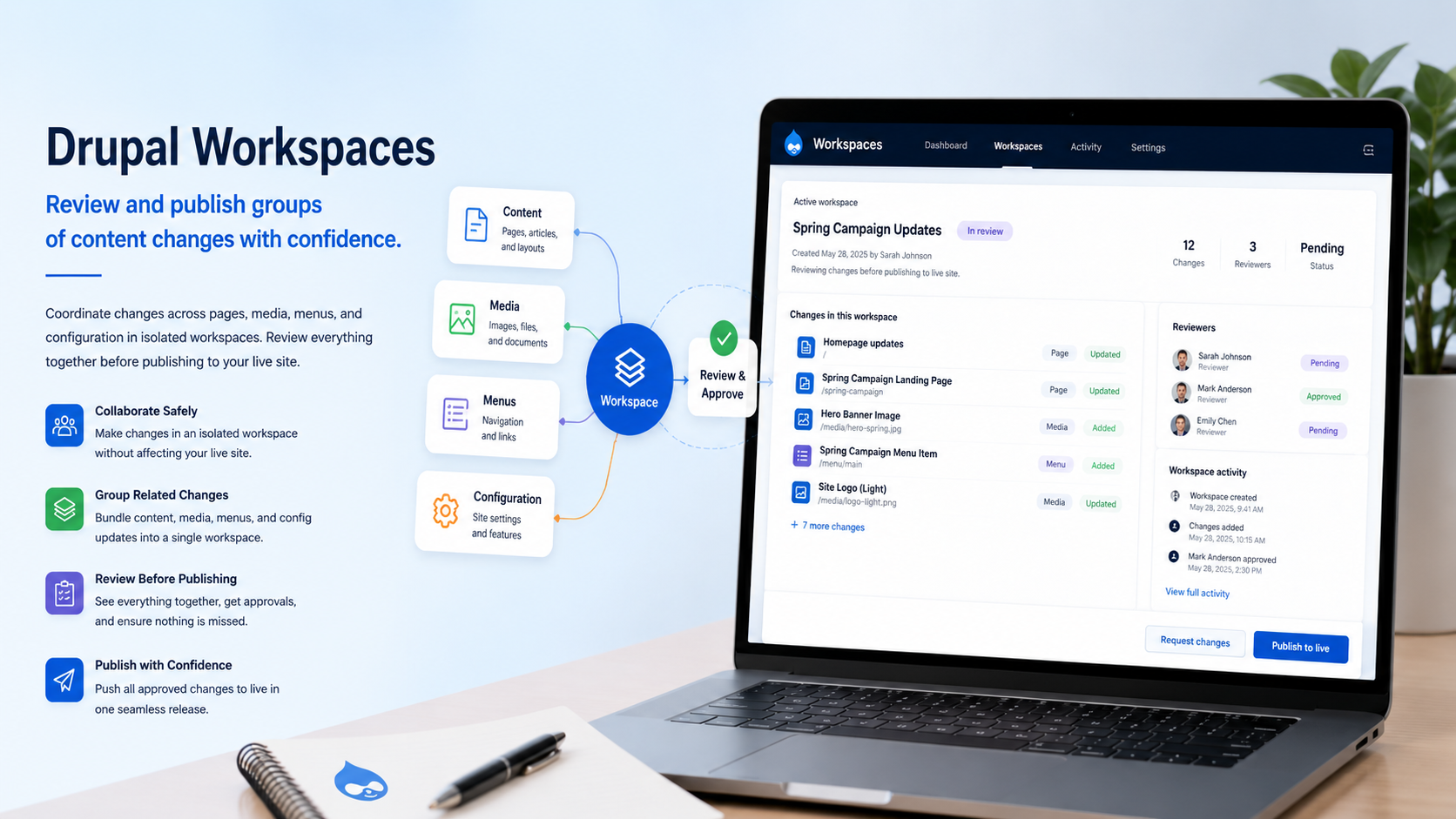
Drupal Workspaces give editorial teams a way to prepare and review groups of related content changes before publishing them live. This is useful for campaigns, launches, events, and other updates where multiple pages need to be reviewed together.
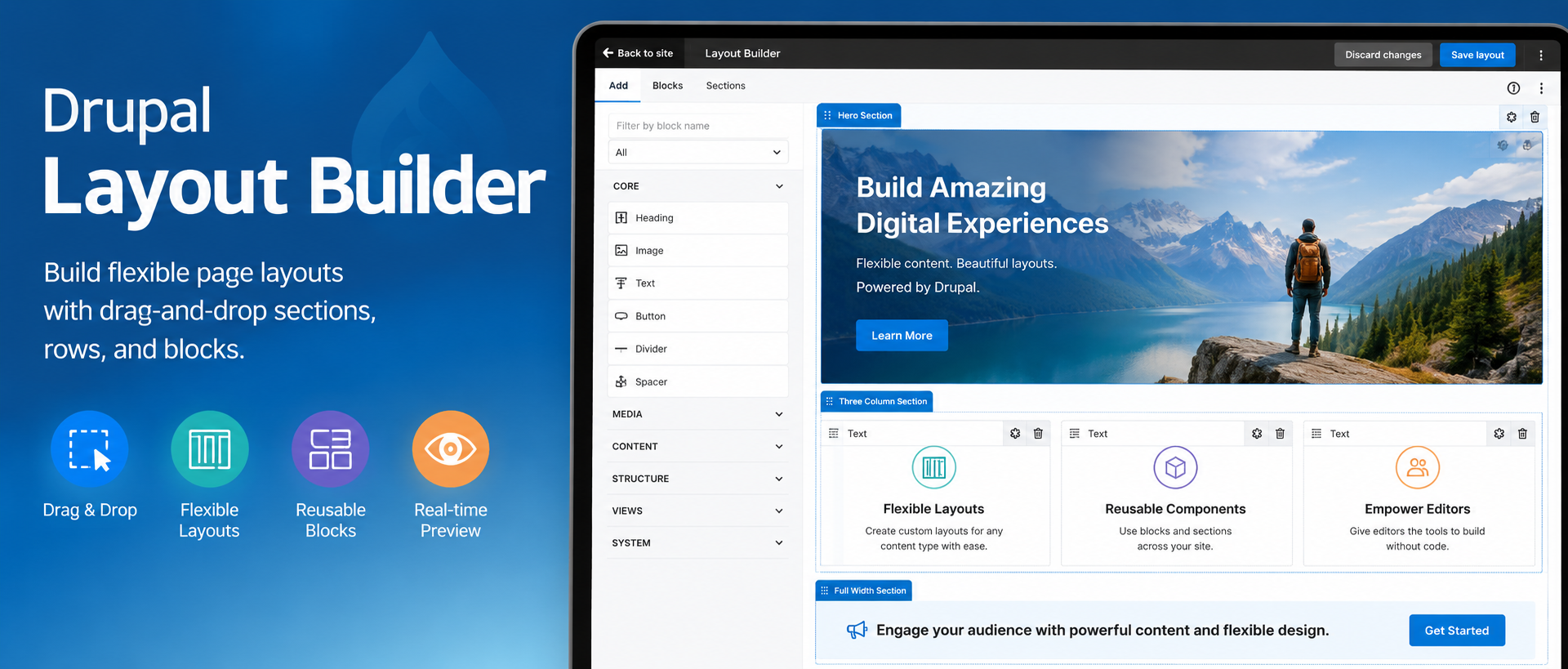
Drupal Layout Builder gives editors and site builders a visual way to arrange page sections, blocks, and content. It helps teams create flexible layouts without needing a developer for every page structure change.