How Drupal Themes and Twig Make Front-End Development Easier
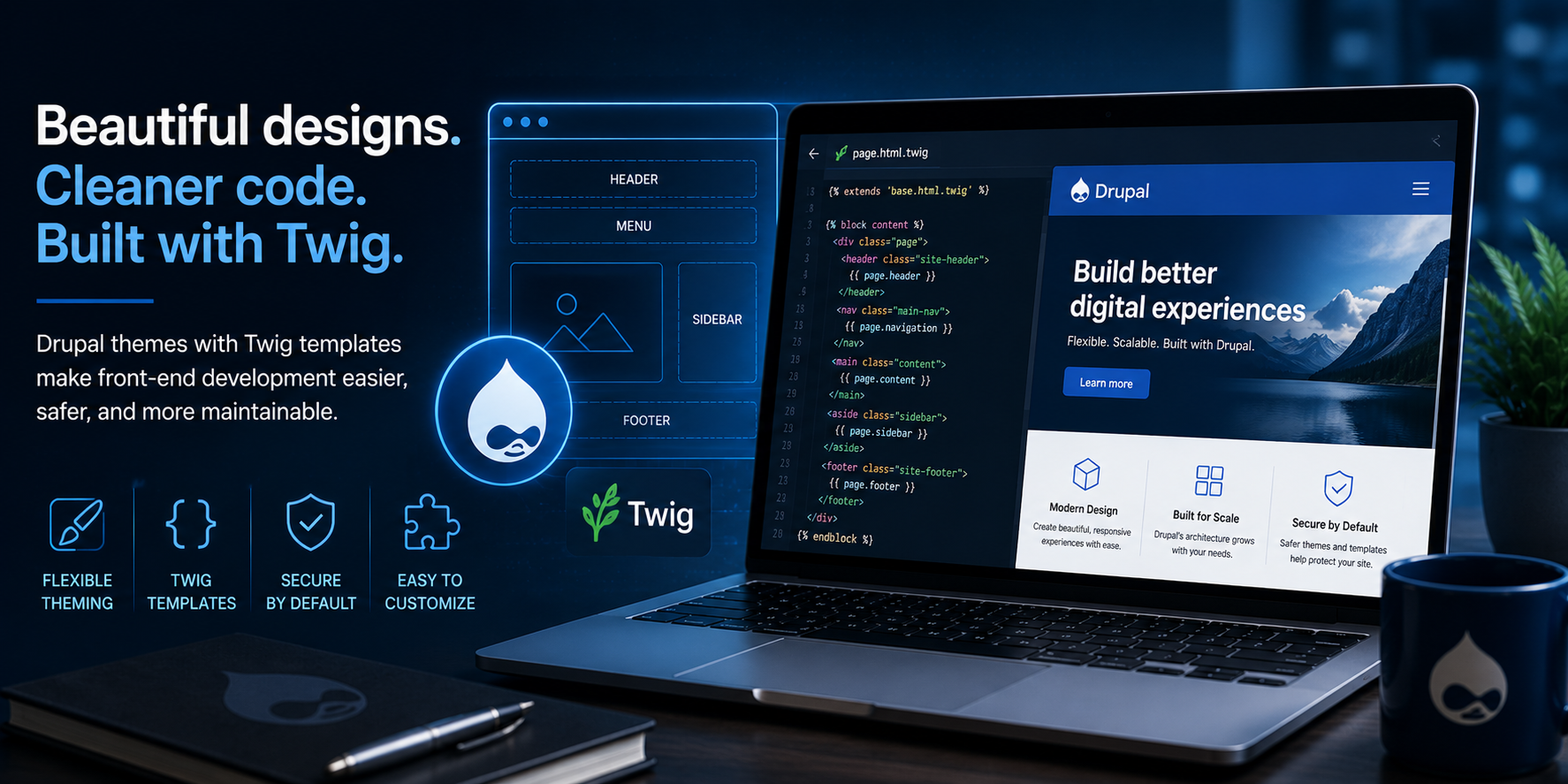
Twig Makes Drupal Theme Development Cleaner and Easier to Maintain
Editor’s note: This article was originally written for Drupal 8. The concepts remain relevant to modern Drupal, but some version-specific details have changed.
What is a Drupal theme? A theme controls the look and feel of a Drupal website. Themes include templates, HTML structure, CSS, JavaScript, media assets, and other frontend resources that determine how content is presented to visitors.
Drupal themes use Twig templates to control page markup and presentation. Compared to older PHP-based template approaches, Twig provides a cleaner and safer way for front-end developers to build and maintain Drupal themes.
This matters because a well-built theme should separate design and presentation from business logic. Front-end developers should be able to work with markup, template variables, regions, components, and styles without needing to place complex PHP code directly inside template files.
What Is Twig and Why Is It Better?
Twig is a templating language used by Drupal to render theme templates. It is easier to read than raw PHP templates and gives theme developers a cleaner way to work with HTML structure, variables, loops, conditions, and reusable template patterns.
One major benefit is safer output handling. Drupal and Twig work together to escape output by default, which helps reduce the risk of cross-site scripting (XSS) when template variables are printed. Developers can still intentionally print trusted markup when needed, but the default behavior is safer than older template approaches.
Twig also encourages better separation between backend functionality and frontend presentation. A theme should decide how content is displayed, not run database queries or contain complex business logic. That separation makes themes easier to maintain, review, and update over time.
How Twig Helps Front-End Developers
Twig makes Drupal theme development more approachable for front-end developers because the templates look and behave more like structured HTML files with clear variables and template logic.
With Twig, developers can customize page templates, node templates, block templates, field templates, menu templates, and other theme files. This gives Drupal sites a flexible way to control markup while still preserving the structured content and configuration managed by Drupal.
Twig templates also support reusable patterns. A development team can create consistent markup across page types, components, content displays, and design systems without rebuilding everything from scratch for each new page.
Drupal Themes Support Flexible Design Systems
A Drupal theme can support much more than colors and fonts. Themes define regions, responsive behavior, component styling, image presentation, navigation patterns, and the overall frontend experience.
When combined with structured content, Layout Builder, Media Library, and reusable blocks, Drupal themes can help teams maintain a consistent design while still giving editors flexibility where it makes sense.
This is especially useful for organizations that need a polished design system, accessible templates, reusable content patterns, and long-term maintainability.
Conclusion
Twig makes Drupal theme development cleaner, safer, and easier to maintain. It helps separate presentation from business logic, supports safer template output, and gives front-end developers a more readable way to build custom Drupal themes.
For organizations with complex content, accessibility requirements, and long-term maintenance needs, Drupal themes and Twig templates provide a strong foundation for building structured, reusable, and maintainable website designs.