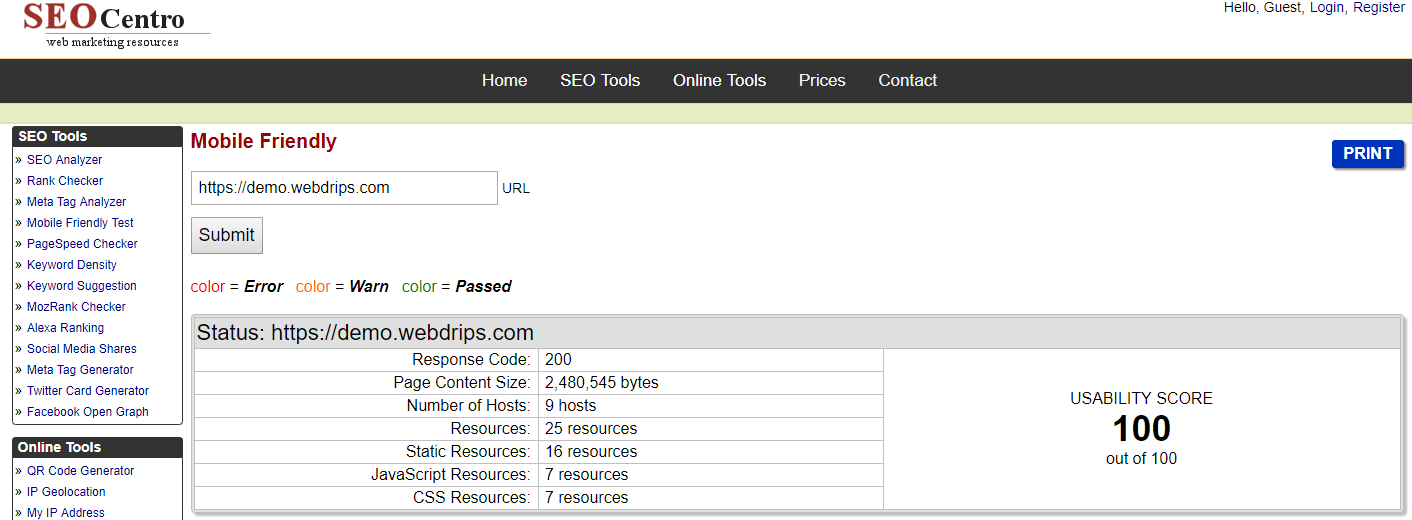
How Drupal Supports Responsive, Mobile-Friendly Websites
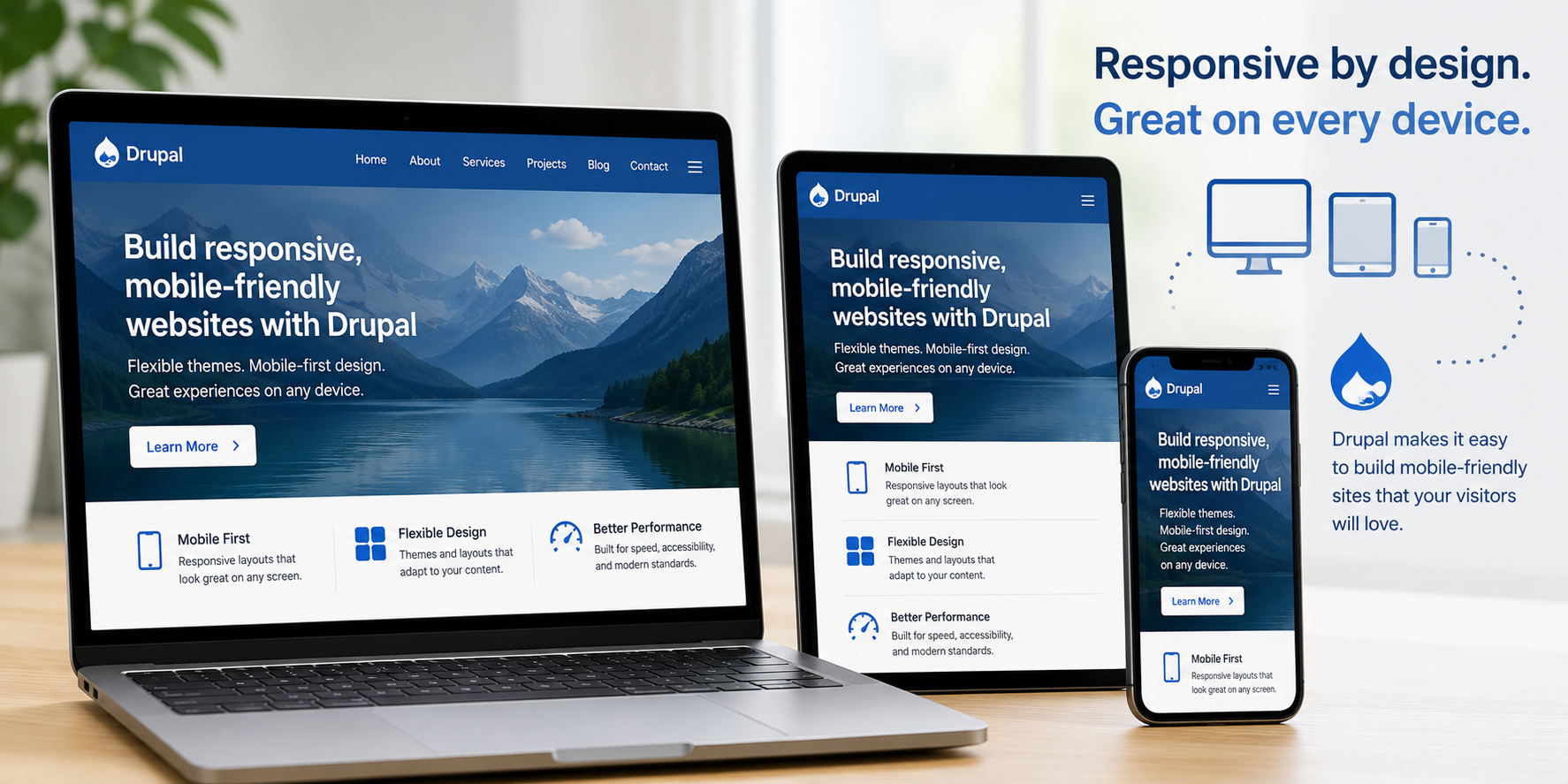
Drupal Supports Responsive, Mobile-Friendly Website Design
Editor’s note: This article was originally written for Drupal 8. The concepts remain relevant to modern Drupal, but some version-specific details have changed.
Drupal has long supported responsive, mobile-friendly website design through flexible themes, structured content, image handling, and mobile-aware administration tools. A well-built Drupal site can provide a strong experience across phones, tablets, laptops, and desktop screens.
What is a Drupal theme? A theme controls the look and feel of a Drupal website. Themes include templates, HTML structure, CSS, JavaScript, media assets, and other frontend resources that determine how content is presented to visitors.
Responsive design matters because visitors use many different devices and screen sizes. A site that works well on desktop but requires pinching, zooming, or awkward scrolling on mobile can frustrate users and reduce engagement.
Drupal can support mobile-friendly layouts for both public-facing pages and the authoring experience. With the right theme and configuration, editors can manage content from a phone or tablet, while visitors receive layouts that adapt to their device.

Responsive Design Across Drupal Themes and Administration
Modern websites need to work across devices, browsers, and operating systems. Drupal themes can be built responsively so menus, blocks, images, tables, and page sections adapt to available screen space.
Responsive design eliminates the need for users to pinch and zoom just to read content or navigate a site. It also supports mobile navigation patterns such as hamburger menus, stacked content sections, and images that scale with the viewport.
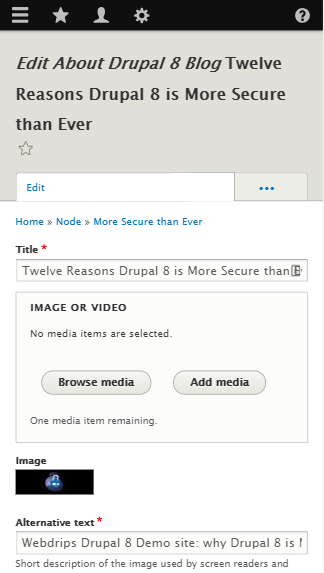
Drupal’s administration experience can also support responsive workflows. This is useful when editors need to make quick content updates, review pages, or manage site content from mobile devices.
Responsive Themes
A responsive Drupal theme can automatically adjust menus, blocks, images, and content regions for different screen sizes. This helps the same content work across desktop, tablet, and mobile layouts.
Drupal also supports responsive image handling, allowing site builders to configure image styles that serve appropriately sized images for different devices and display contexts.
Responsive Tables and Structured Content
Tables and structured content can create challenges on small screens. Drupal can support responsive table behavior and structured displays that prioritize important information when screen space is limited.
This is especially helpful for sites with directories, reports, event listings, publications, or other data-heavy pages that need to remain usable on mobile devices.
Responsive Authoring Experience
Content teams sometimes need to make edits while away from a desktop computer. A responsive administration experience helps editors add, review, or update content from phones and tablets when needed.
Mobile-friendly authoring does not replace a full desktop editorial workflow, but it can make quick updates and reviews much more practical.
Mobile Performance
Responsive design is only part of a good mobile experience. Performance also matters. Large images, unnecessary scripts, heavy layouts, and poorly optimized assets can make a mobile-friendly layout feel slow.
Drupal provides tools that can support better performance, including caching, image styles, asset aggregation, and structured approaches to page building. Combined with a well-built responsive theme, these tools can help improve the experience for mobile visitors.
Conclusion
Drupal supports responsive, mobile-friendly websites through flexible themes, responsive images, structured content, and mobile-aware administration tools. With thoughtful configuration and frontend development, Drupal can provide a strong experience across phones, tablets, and desktops.
If your website is difficult to use on mobile devices or performs poorly on smaller screens, it may be time to review your theme, image handling, layout patterns, and overall Drupal implementation.